
Quartz vs. Granite Countertops: Which Is Right for Your Toledo Kitchen?
Quartz and granite are the two countertop materials we install most often across greater Toledo, and homeowners almost always ask the same question during the design phase: which one should I actually choose? There’s no universally correct answer — it depends on how you use your kitchen, your maintenance tolerance, and your budget — but there is a clear, honest breakdown of the real differences.
What They Actually Are
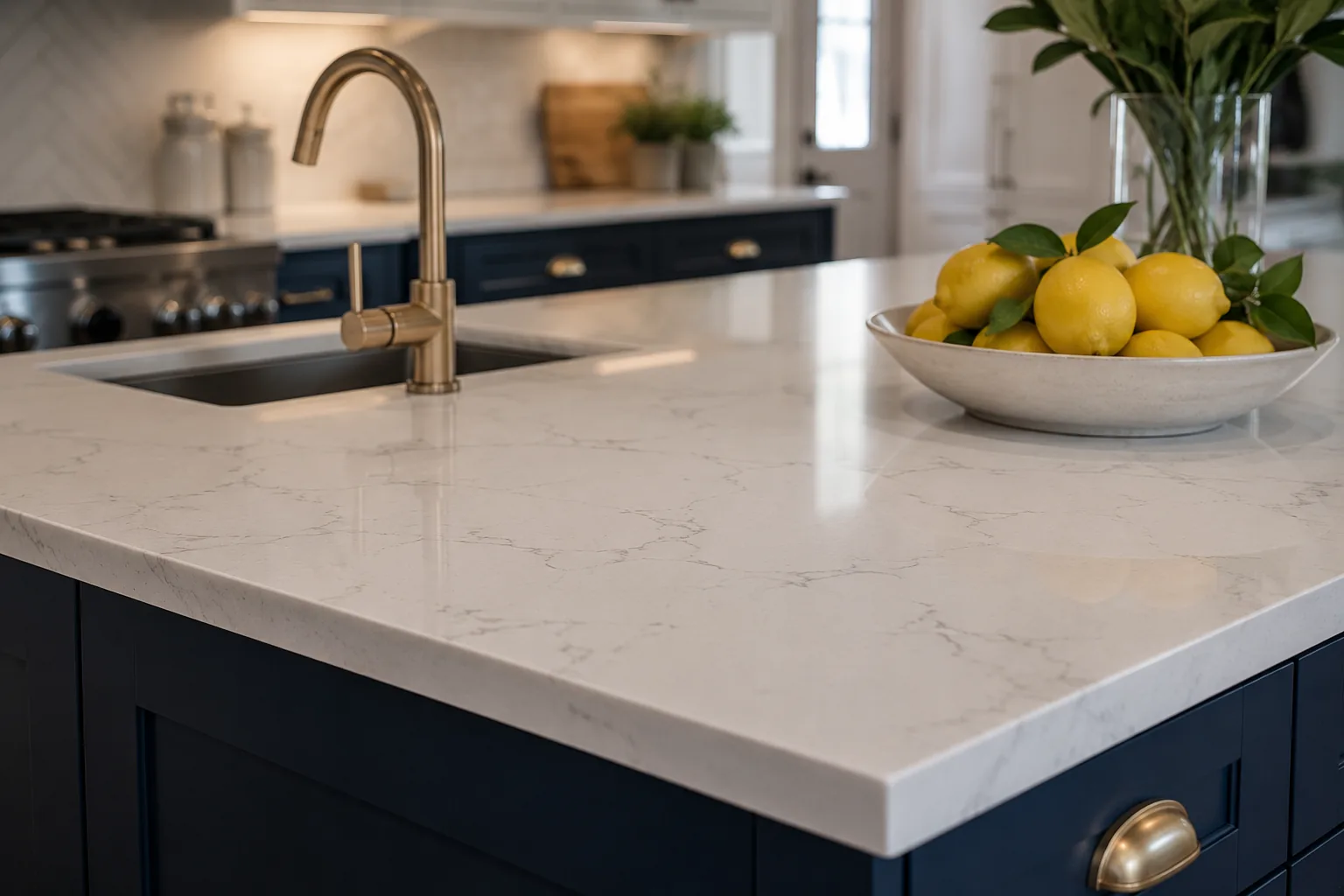
Granite is a natural stone, quarried in slabs and cut to fit your kitchen. Every slab is unique, with natural veining and mineral patterns that vary piece to piece. Quartz is an engineered material — roughly 90 to 95 percent ground natural quartz combined with resins and pigments — manufactured to a consistent pattern and color. Neither is objectively “better.” They perform differently, and that’s what actually matters for a Toledo kitchen.
Quartz vs. Granite at a Glance
| Factor | Quartz | Granite |
|---|---|---|
| Material | Engineered (90–95% quartz + resin) | Natural stone, one of a kind |
| Sealing | Never needed | ~Once a year |
| Heat resistance | Moderate — use trivets | High — handles direct heat well |
| Pattern | Consistent, manufactured | Unique per slab |
| Cost installed | $55 to $75/sq ft (mid-range) | $45 to $90+/sq ft (varies widely) |
| Best for | Heavy daily use, low maintenance | One-of-a-kind look, heat near the stove |
Durability and Maintenance
This is where the real difference lives. Granite is porous and requires periodic sealing — typically once a year, sometimes less depending on the specific stone — to resist staining from wine, oil, and acidic foods. Skip sealing for a few years and a granite counter can absorb stains that are difficult or impossible to fully remove. Quartz is non-porous straight out of the factory. It never needs sealing, and it resists staining, bacteria, and moisture significantly better than any natural stone. For a household that cooks daily and doesn’t want a yearly maintenance task, quartz is the lower-maintenance choice by a wide margin.
Where granite has an edge is heat resistance. Natural granite can handle direct contact with a hot pan far better than quartz, which can discolor or crack under sustained high heat because of its resin content. We advise every quartz-counter client to use trivets and hot pads as a standing habit, not an occasional precaution.
Appearance and Consistency
If you want a counter where no two homes look identical, natural granite delivers that — every slab is genuinely one of a kind, and higher-end granite can have dramatic, deep coloring and movement that engineered stone doesn’t fully replicate. Quartz manufacturers have gotten very good at mimicking marble and natural stone patterns, but a trained eye (and increasingly, a casual observer) can often tell the difference up close. If pattern consistency matters to you — for example, wanting your island and perimeter counters to match exactly, or needing multiple slabs to look identical — quartz is the more reliable choice, since it’s manufactured to a batch specification rather than cut from whatever nature produced.
Cost Comparison for Toledo Projects
Pricing varies by tier, but as a general range for greater Toledo installations: mid-range quartz typically runs $55 to $75 per square foot installed, while granite spans a wider range, roughly $45 to $90+ per square foot installed depending on the specific stone’s rarity and origin. Entry-level granite can actually come in below entry-level quartz, while premium exotic granite can significantly exceed premium quartz. The honest summary: neither material is reliably cheaper than the other across the board — it depends on the specific tier you’re comparing.
Which Choice Fits Which Kitchen
We steer clients toward quartz when: the kitchen sees heavy daily use with kids or frequent cooking, the homeowner wants zero maintenance obligations, or the design calls for a specific consistent color/pattern (like the waterfall-edge islands covered in our 2026 design trends guide).
We steer clients toward granite when: the homeowner wants a genuinely one-of-a-kind natural surface, heat resistance near the stove is a priority, or the budget allows for a mid-tier granite that beats comparable quartz on visual impact per dollar.
A Note on Resale in the Toledo Market
Both materials are well recognized and well received by buyers in our local market. Quartz has become the more commonly expected “upgrade” material in listings over the last several years, so kitchens with quartz counters tend to photograph and show slightly better to buyers who are comparing multiple listings quickly. This is a minor factor compared to overall kitchen condition and layout, but it’s worth knowing if resale timing is part of your decision.
Frequently Asked Questions
Can I install granite myself or does it require professional installation?
Both materials require professional templating and installation. Slabs are heavy (granite and quartz both weigh roughly 15-18 lbs per square foot), require precise cutting for sinks and cooktops, and need proper seam work — this isn’t a realistic DIY project for either material.
Does quartz ever crack or chip?
Yes, though less often than granite. Quartz can chip at edges from a heavy dropped object, and can crack under extreme, sustained heat. It’s more resistant to everyday wear than granite but isn’t indestructible.
How long does countertop installation take once ordered?
After templating your kitchen (usually done after cabinets are installed), fabrication typically takes 1 to 3 weeks depending on the supplier and material, with installation itself completed in a single day. See our full remodel timeline guide for how this fits into your overall project schedule.
Want to see how countertop choice affects your total project cost? Check our 2026 Toledo cost guide.